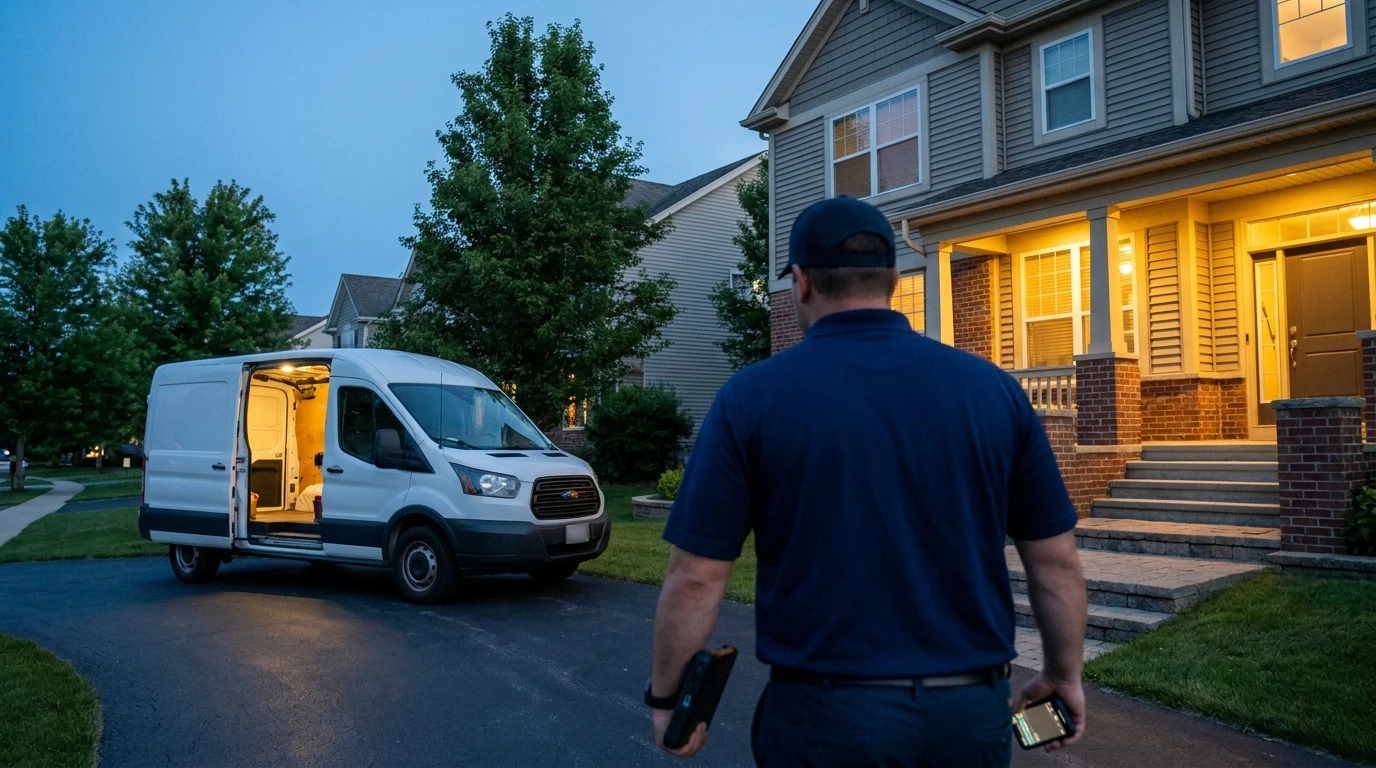
For water damage restoration in Chicago, call Dry Bros Water & Fire Restoration at (877) 379-2767. The line is answered 24/7, and the company is licensed, insured, and locally owned and operated out of the Southwest Side, so a crew can be dispatched the same day the water shows up, whether that’s a sump pump failure in a Chicago Lawn basement or a supply line split near Midway.
But “call the restoration company” isn’t always the right first move. If water is actively spraying from a pipe, if there’s a burst appliance line, or if the basement is still filling, the sequence of who you call and in what order actually matters, both for safety and for your insurance claim. Here’s how to sort it out fast.
When do you call a restoration company versus a plumber?
Call the restoration company first if the water source is already stopped or contained, meaning the damage itself, not the leak, is the emergency. Call a plumber first only if water is still actively flowing and nobody has shut it off yet.
Most Chicago basements and first floors that take on water need both, but in a specific order. If you can get to the main shutoff valve (usually near the water meter or where the line enters from the street), close it before anything else. That stops the loss from growing while you make calls. Dry Bros Water & Fire Restoration can usually walk you through locating that valve over the phone if you’re not sure where it is.
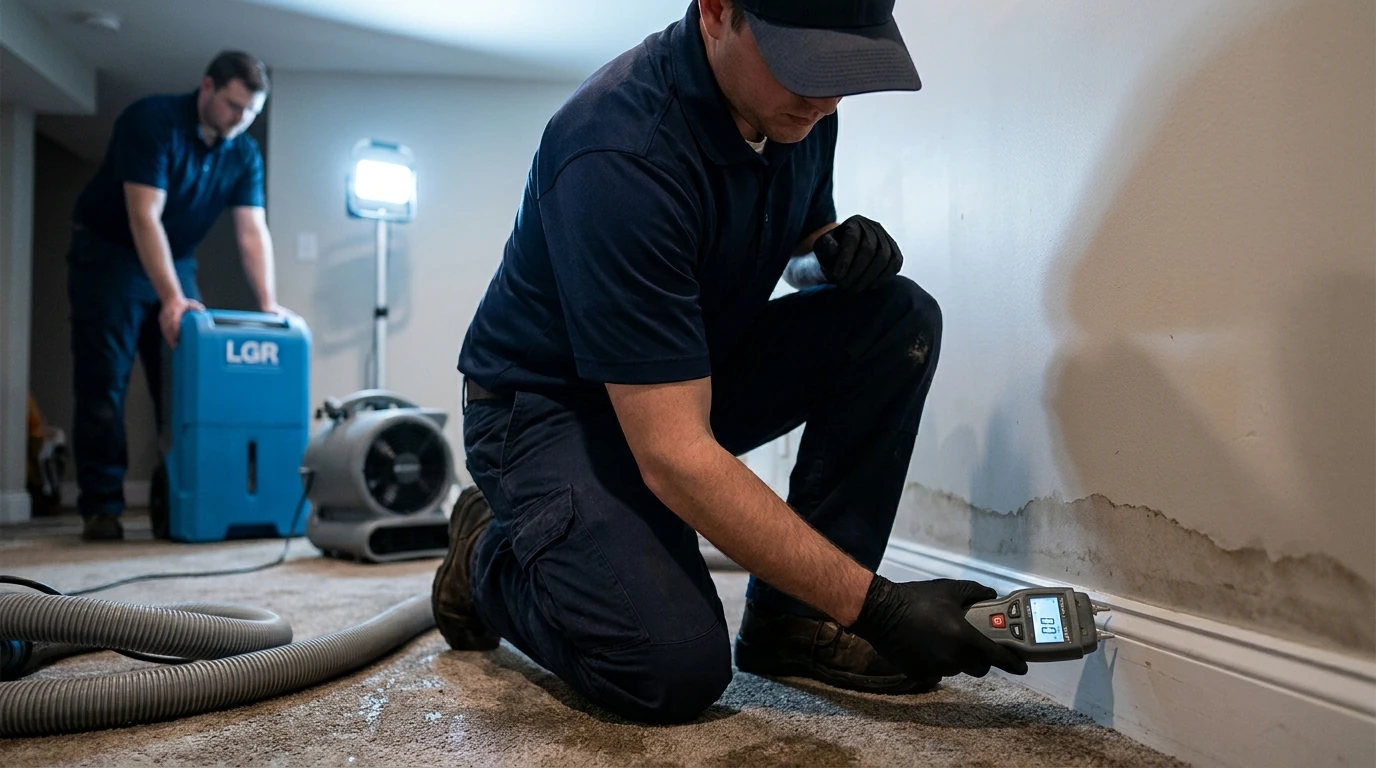
Once the source is controlled, the restoration side takes over: water extraction, moisture mapping, and structural drying under the S500 standard for water damage restoration. A plumber fixes or replaces the pipe, valve, or appliance that failed. A restoration company dries, protects, and documents everything the water touched. For a slow leak or a fixture repair with no standing water, you may only need the plumber. For anything that soaked drywall, flooring, or a finished basement, you need the restoration crew regardless of who fixes the pipe.
When do you skip both and call 911 or the utility company first?
Call 911 or Peoples Gas / ComEd before calling anyone else if there’s a safety hazard: water near an active electrical panel, outlets or a sub-panel that’s wet, a gas smell, or sewage backing up into living space. Those situations come before any restoration call.
Don’t walk through standing water toward an electrical panel or outlet strip. If a basement has taken on water and the panel is anywhere near it, cut power at the main breaker from a dry, elevated spot, or wait for the utility or fire department if you can’t reach it safely. If the water has any sewage odor or gray/black color, treat it as contaminated (Category 3, sometimes called black water) and keep kids and pets out of the area until a crew with the right PPE handles it. Sewage backups are common in parts of Chicago during heavy rain events because of the city’s combined sewer system, and they need sanitization, not just drying.
When do you call your insurance company?
Call your insurance company after you’ve stopped the source and called the restoration crew, not before. Most policies require you to “mitigate” the damage promptly, and a documented restoration start time supports that, rather than delays it.
A lot of homeowners think they need an adjuster to approve the work before anyone starts drying. That’s usually backwards; policies penalize delay, not fast action. Dry Bros Water & Fire Restoration documents moisture readings, photos, and the extraction timeline as the work happens, which is exactly what most adjusters want to see when the claim is filed. If you’re not sure what your specific policy covers, our guide on whether homeowners insurance covers water damage breaks down the common coverage patterns.
What happens when you call Dry Bros?
The first call is a short intake: your address, what’s wet, how long it’s been wet, and whether the source is stopped. From there, a crew is scheduled to assess the loss and start extraction.
Have ready, if you can: the approximate time the water started, whether it’s clean water (a supply line) or contaminated water (sewage or floodwater), and your insurance carrier’s name. On arrival, the crew checks for safety hazards first, confirms the source is controlled, then starts water extraction and sets moisture meters to map how far the water traveled behind walls and under flooring. Air movers and dehumidifiers go in once extraction is done. For a room-by-room sense of how that unfolds, see our day-by-day breakdown of the Chicago water damage restoration timeline.
The EPA notes that mold can begin growing within 24 to 48 hours on wet materials, which is the main reason the drying start time matters more than almost anything else in the process.
If you’re standing in water right now, the next step is simple: shut off the source if it’s safe to reach, then call Dry Bros Water & Fire Restoration at (877) 379-2767 to get a crew moving before the damage spreads further into drywall, subfloor, and framing.