TL;DR: A burst pipe in winter means shutting off the main water valve immediately, then getting standing water extracted within hours to limit drywall, flooring, and mold damage. Most Chicago homeowners policies cover the sudden water damage (not the pipe repair itself), and professional drying follows the IICRC S500 standard, typically taking 3 to 5 days with air movers and dehumidifiers running around the clock.
It’s 4 a.m., the temperature outside dropped below zero overnight, and you just stepped onto a soaked hallway floor in your Portage Park bungalow or a Lincoln Park two-flat. A supply line froze somewhere in an exterior wall or an unheated attic, split under pressure, and now it’s pouring water into your living space. You need to know what to do in the next ten minutes, not in the morning.
What should I do in the first 10 minutes after a pipe bursts?
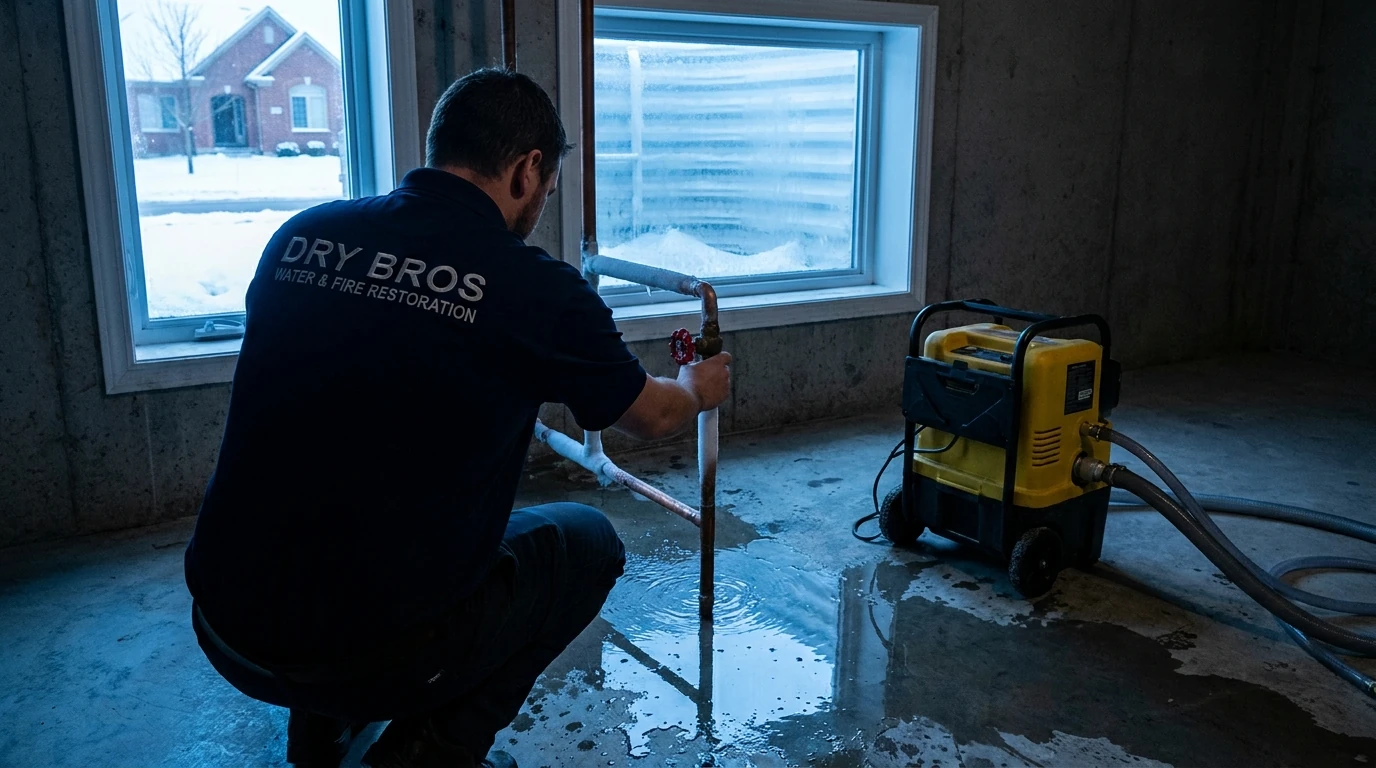
Shut off the main water supply valve first, before you do anything else, because every minute the line stays pressurized adds more water to the loss. The main shutoff is usually near where the water line enters the house: a basement wall, a utility closet, or near the water meter.
Once the water’s off, flip the breaker to any outlets or fixtures in the flooded area if you can reach the panel without stepping in water. Then start moving: soak up what you can with towels, lift furniture legs onto foil or blocks, and pull rugs off wet flooring before they wick water into subflooring.
Take photos of the standing water and the source of the break before you clean anything up. Insurance adjusters want to see the loss as it happened, not the aftermath you’ve already mopped. After that, call for extraction. Water sitting on hardwood, laminate, or drywall for more than a few hours starts causing damage that drying alone won’t fix.
How does Chicago’s winter actually cause pipes to burst?
Pipes burst in winter when water inside them freezes, expands, and builds pressure against a weak point in the line, not usually right at the frozen section but often just past it. Chicago’s housing stock makes this common in uninsulated crawl spaces, attic runs, and exterior walls on older bungalows and two-flats.
A hard polar vortex drop, the kind that pushes temperatures well below zero for 24 hours or more, is the classic trigger. Lake Michigan’s wind off the water can also chill exposed pipe runs on the north and east sides of a house faster than homeowners expect. Pipes running along an exterior wall with poor insulation, or supply lines to an unheated garage or porch, are the usual failure points.
The fix going forward is prevention: keep a trickle of water running through vulnerable lines during a cold snap, open cabinet doors under sinks on exterior walls, and keep the thermostat no lower than 55°F if you’re traveling. None of that helps once a pipe has already split, but it’s worth knowing for next winter.
What does professional burst pipe cleanup actually involve?
Professional cleanup starts with extraction, moves into structural drying, and ends with moisture verification before anything gets rebuilt. Each phase has a purpose, and skipping one is usually why homeowners end up with hidden mold months later.
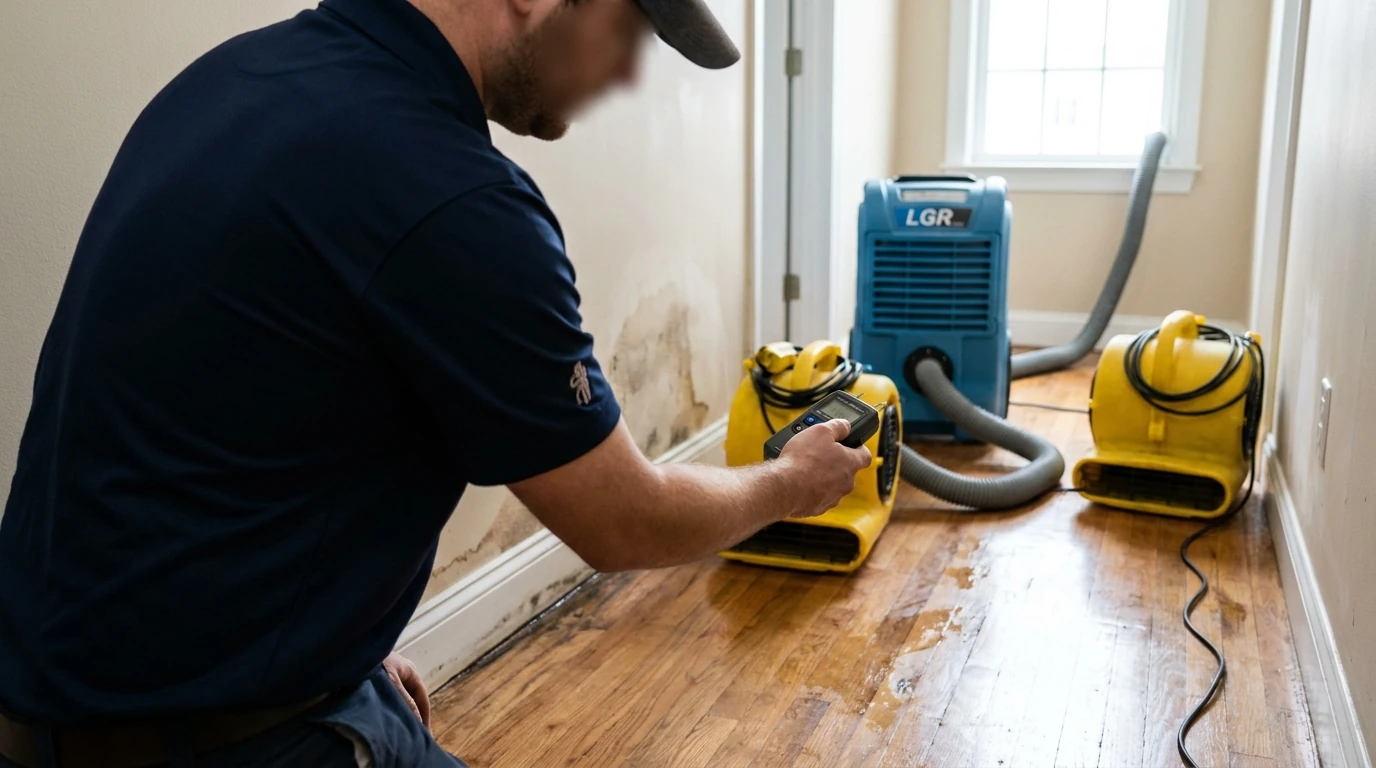
A technician first extracts standing water with truck-mounted or portable pumps, then uses a moisture meter to map how far water traveled into walls, subfloor, and baseboards, since water almost always spreads farther than it looks. Drywall and baseboard sections that stayed wet get removed if they can’t dry in place. Air movers and low-grain-refrigerant (LGR) dehumidifiers then go to work, following the drying benchmarks set out in the IICRC S500 standard, the industry reference for water damage restoration. Technicians log moisture readings daily until the affected materials hit dry-standard numbers, not just until the floor feels dry to the touch.
That process usually runs 3 to 5 days for a contained loss, longer if water got into wall cavities or subfloor that needs more time to release moisture. For readers who want a fuller day-by-day breakdown, our water damage restoration timeline post covers what each day typically looks like.
Will homeowners insurance cover burst pipe cleanup?
Most standard homeowners policies in Illinois cover sudden and accidental water damage from a burst pipe, including the cleanup, drying, and repair of damaged materials, but not the cost of repairing the pipe itself. Insurers generally draw a line between the damage the water caused and the plumbing failure that caused it.
The exception that trips people up is gradual damage. If an adjuster finds evidence the pipe had been leaking slowly for weeks before it fully split, some policies will deny the claim as a maintenance issue rather than a sudden loss. This is where documentation matters: photos of the break, a clear timeline of when you noticed it, and a written drying log from whoever handled the cleanup all support a sudden-loss claim. Our burst pipe emergency checklist walks through what to document in the moment, and our broader guide on homeowners insurance and water damage covers how deductibles and coverage limits typically work.
What should I do next?
Once the water’s off and you’ve documented the damage, the next call should go to whoever is going to extract the water, not a plumber alone, since standing water starts causing secondary damage within hours regardless of whether the pipe itself has been fixed. Dry Bros Water & Fire Restoration answers 24/7 and can get a crew moving on extraction while you’re still coordinating a plumber for the repair itself.
A burst pipe at 4 a.m. in a Chicago January is not a problem you want to sit on until business hours. The faster water comes out and drying equipment goes in, the less of your home you lose to it.
About Dry Bros Water & Fire Restoration
Dry Bros Water & Fire Restoration is a licensed and insured, locally owned and operated restoration company serving Chicago, IL and surrounding communities including Naperville, Evanston, Oak Park, and Skokie. Their crews handle water damage restoration, emergency water removal, burst pipe cleanup, basement flooding, flood damage, fire and smoke damage restoration, mold remediation, and related services, and the company answers calls 24/7. Call Dry Bros Water & Fire Restoration at (877) 379-2767 when a pipe burst needs an immediate response.