Mold Remediation in Lincolnwood
24/7 mold remediation in Lincolnwood, IL. Insurance billing accepted. Call (877) 379-2767.
Our technicians are dispatched from our Chicago, IL headquarters and are typically on-site in Lincolnwood within 60 minutes of your call.
Finding mold in a Lincolnwood basement or crawlspace rarely means the problem started yesterday. Between the clay-heavy soil common across this stretch of Cook County and the number of post-war brick ranch homes still running original plumbing, moisture tends to work behind the walls for weeks before anyone notices the smell. If you’re staring at a dark patch on drywall or a musty closet that won’t air out, the window between “minor issue” and “full remediation” is usually shorter than homeowners expect.
Why Lincolnwood Properties See Mold Issues
Lincolnwood’s housing stock is overwhelmingly mid-century: brick ranches and split-levels built through the 1950s and 60s, many with partial basements and the original cast-iron or galvanized supply lines. Those pipes don’t fail dramatically, they weep slowly at joints, and that slow weep is exactly what mold colonies prefer over a sudden flood. Add in flat, clay-based soil that drains poorly after heavy spring rain off the Chicago River’s North Branch watershed, and foundation walls here tend to stay damp longer than homes on sandier ground further west. Sump pumps working overtime during a wet stretch, humid attics under older roof decking, and finished basements with carpet laid directly over concrete all show up again and again on the jobs we see in this part of Cook County.
Our Mold Remediation Process in Lincolnwood
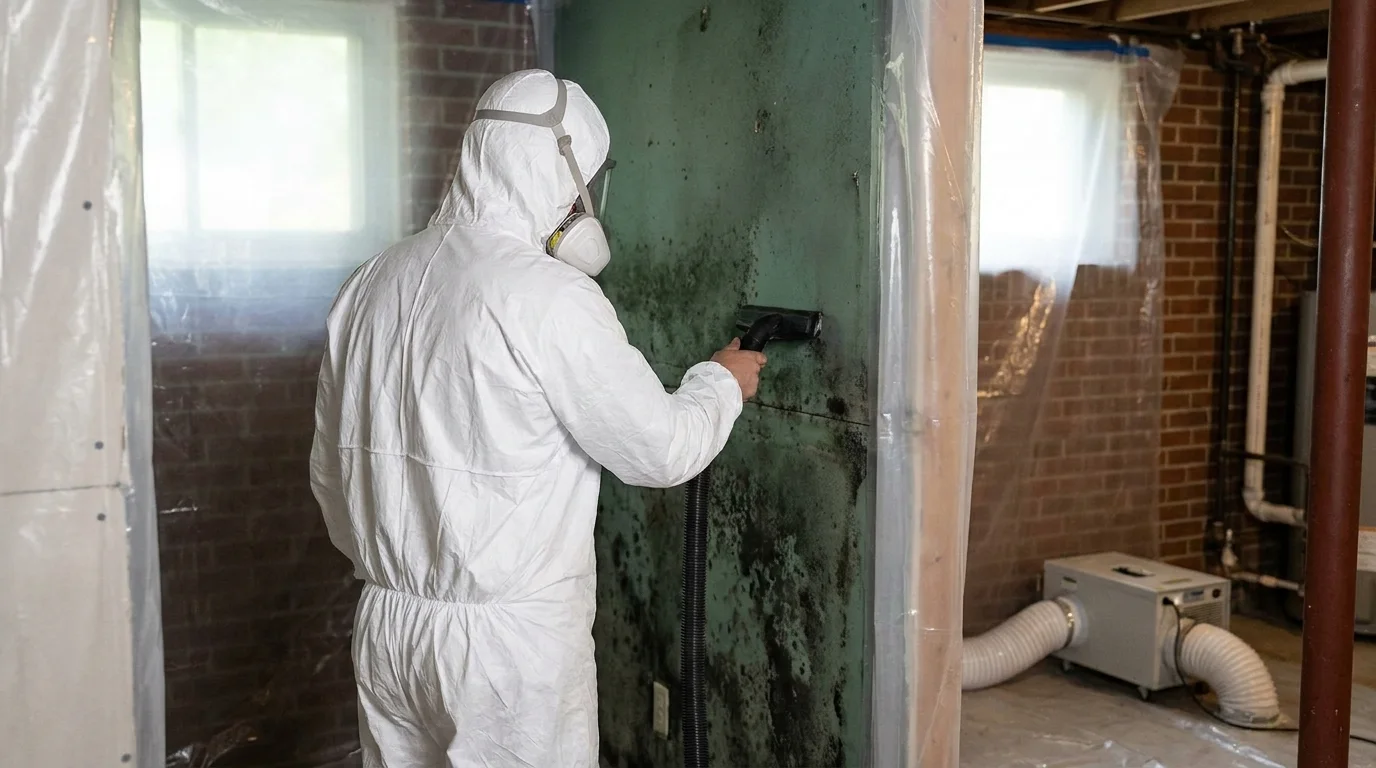
We start with a moisture map, not a guess. Using moisture meters and, where warranted, a borescope to look inside wall cavities, we find out whether you’re dealing with surface mold on drywall or something that’s already reached the studs and subfloor. Containment goes up before any disturbance happens: negative air pressure, poly sheeting, and HEPA filtration keep spores from migrating into the rest of a home while we work, which matters more in the tighter floor plans typical of Lincolnwood’s ranch-style houses than it would in a newer open-concept build. Affected porous materials, drywall, insulation, carpet padding, usually come out rather than get treated in place. Structural wood and masonry get cleaned with antimicrobial agents and dried down per the IICRC S520 standard before we close anything back up. We also check attic ventilation and crawlspace vapor barriers while we’re in there, since a remediation that ignores the moisture source just buys the mold a few months before it’s back.
Equipment & Methods We Use for Mold
Black mold remediation and routine mold cleanup use the same core toolkit but different intensity. For visible surface growth on a bathroom ceiling, HEPA vacuuming, antimicrobial treatment, and dehumidification may be enough. For colonized drywall or suspected toxigenic species behind a vanity or around a window frame, we build a sealed containment chamber, run air scrubbers continuously, and bag contaminated material for disposal before it ever leaves the containment zone. Air movers and commercial dehumidifiers bring ambient humidity down below the range mold needs to re-establish, and we verify dryness with moisture meters rather than a visual check, because drywall can look dry on the surface while the material behind it is still saturated.
Local note
A detail that trips up a lot of Lincolnwood homeowners: many of the village’s original ranch homes have shallow crawlspaces instead of full basements, and those crawlspaces were rarely built with a proper vapor barrier. Ground moisture wicks straight up into the floor joists above, which is why we’ll sometimes find mold on the underside of a first-floor subfloor in a house where the owner swears the basement is bone dry. If your home has one of these crawlspaces, it’s worth having it checked even if nothing looks wrong upstairs.
If you’re dealing with a musty smell that won’t go away or visible growth after a slow leak, Dry Bros answers calls 24/7 and can talk you through what to look for before a crew ever gets to your door. Mold remediation in Lincolnwood works best when it starts early, before colonies spread past what a surface clean can handle, so don’t wait on a patch that’s already there to decide whether it’s worth a call.
Mold Remediation in Lincolnwood: Service Coverage
Frequently Asked Questions
How fast can you arrive for mold remediation in Lincolnwood?
Are Lincolnwood's older ranch homes more prone to hidden mold than newer construction?
Does Lincolnwood's clay soil affect how mold develops in basements?
What does black mold remediation involve differently than routine mold cleanup?
How long does mold remediation typically take in a Lincolnwood home?
Will my homeowners insurance cover mold remediation in Lincolnwood?
Mold Remediation response in Lincolnwood
Most Lincolnwood calls see a technician on-site within 60 minutes from our Chicago headquarters.