TL;DR: Water damage restoration in Chicago typically costs $1,500 to $12,000 for most residential losses. Clean water from a burst pipe runs $1,500 to $4,000. Contaminated water from a backed-up sewer or flooding can push $5,000 to $12,000 or more. Your homeowners policy likely covers sudden, accidental losses but not slow leaks or flood events. The final number depends on water category, square footage affected, how many days of drying equipment runs, and what materials need to come out.
You just shut off the water, moved what you could, and now you’re staring at soaked drywall wondering what this is going to cost. The adjuster hasn’t called back yet. Here’s what Chicago homeowners actually pay for water damage restoration, broken out by the factors that move the number most.
How Much Does Water Damage Restoration Cost in Chicago?
Most Chicago homeowners pay between $1,500 and $12,000 for water damage restoration, with the average residential loss landing around $3,000 to $5,000. That range is wide because the single biggest cost driver is the category of water involved, and category 3 losses cost three to four times more than category 1 losses of the same square footage.
The IICRC S500 standard defines three water categories that restoration companies use to scope and price a job:
- Category 1 (clean water): Water from a supply line, ice maker, or clean toilet tank. Lowest contamination risk, lowest cost. Think burst pipe in a finished basement or a dishwasher supply line failure.
- Category 2 (gray water): Water with some contamination. Washing machine discharge, aquarium overflow, or a toilet overflow with urine only. Requires more aggressive drying protocols and antimicrobial treatment.
- Category 3 (black water): Sewage backups, floodwater from outside, or any water that has been sitting long enough to grow bacteria. Full PPE, antimicrobial treatment, and often removal of porous materials that cannot be dried to standard. This is the most expensive category by a wide margin.
Cost by Water Category and Scenario
| Scenario | Typical Chicago Cost Range |
|---|---|
| Category 1, single room (under 200 sq ft) | $1,200 - $3,500 |
| Category 1, multi-room or finished basement | $3,000 - $6,500 |
| Category 2, appliance leak (kitchen, laundry) | $2,500 - $5,500 |
| Category 2, toilet overflow (bathroom + subfloor) | $2,000 - $4,500 |
| Category 3, sewage backup (basement) | $4,500 - $10,000+ |
| Category 3, exterior flooding (crawl space or basement) | $6,000 - $15,000+ |
| Structural drying only (no demolition) | $1,500 - $3,500 |
These are typical industry ranges for the Chicago metro area, not quotes. Every loss is different. A written scope from your restoration company before work begins is the only number that applies to your specific job.
What Factors Move the Price Up or Down?
Four variables account for most of the cost spread between a $1,500 job and a $12,000 job.
Square footage and affected materials. A 150-square-foot laundry room with vinyl flooring is a very different job from a 600-square-foot finished basement with carpet, drywall, insulation, and wood framing. More affected area means more extraction time, more drying equipment, and more material removal if the drywall or flooring cannot be dried in place.
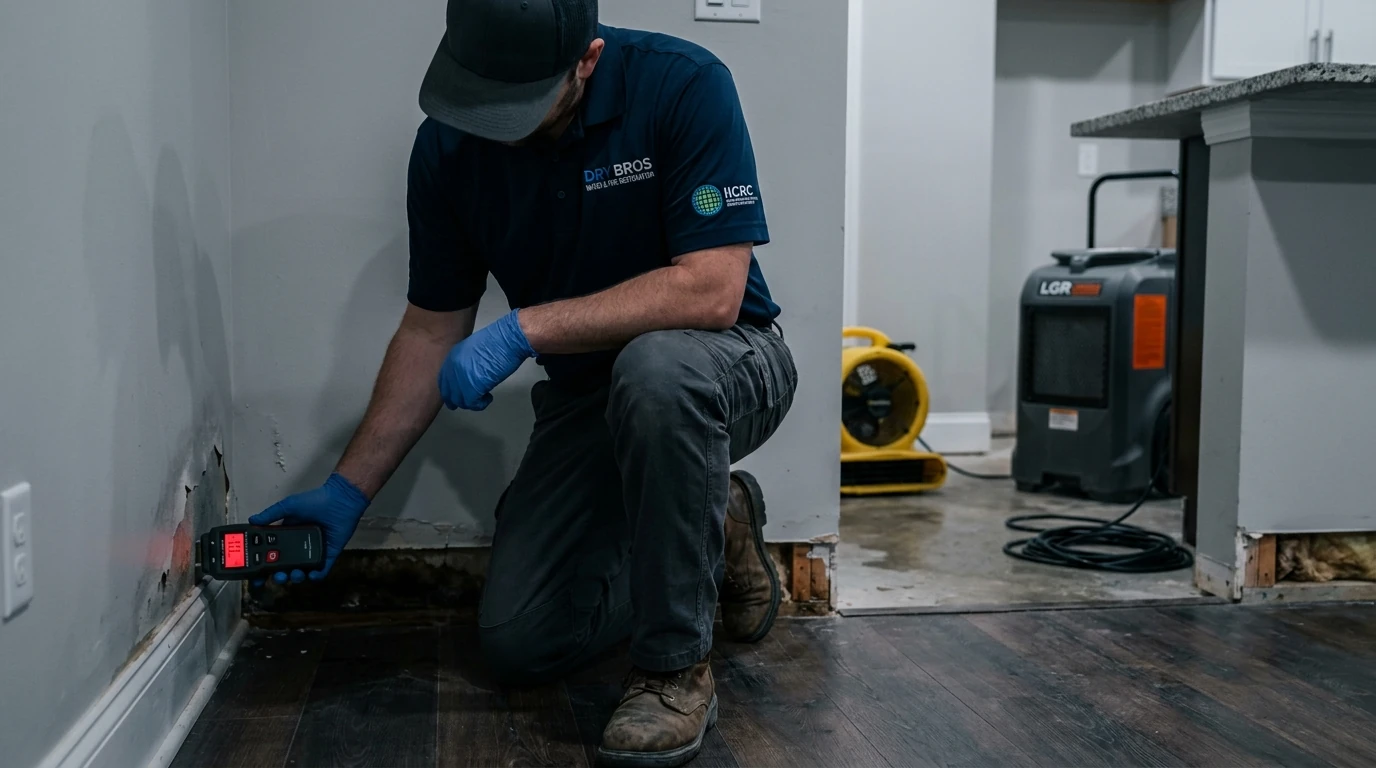
Drying days and equipment. Structural drying is not a one-day job. The IICRC S500 standard calls for drying to pre-loss moisture content, which typically takes 3 to 5 days for a standard residential loss. Each day of drying runs equipment: LGR (low-grain refrigerant) dehumidifiers, air movers, and sometimes desiccant dehumidifiers for tighter spaces. Equipment rental and monitoring adds roughly $200 to $500 per day depending on the number of units placed. A job that needs 5 days of drying costs more than one that clears in 3.
Demolition and material removal. Category 2 and 3 losses often require removing wet drywall, insulation, and flooring that cannot be dried to standard. Demo adds labor and disposal costs. In Chicago, landfill tipping fees and debris hauling typically add $300 to $800 to a mid-size job.
Response time. Water damage follows a predictable timeline: materials that are wet for under 24 hours are usually salvageable. After 48 to 72 hours, mold growth becomes likely, and what was a category 1 loss can become a category 2 or 3 situation. Faster response almost always means lower total cost.
Chicago-specific factors. Older housing stock in neighborhoods like Logan Square, Bridgeport, and Pilsen often has plaster walls, original hardwood, and cast-iron drain lines. Plaster takes longer to dry than modern drywall. Hardwood floors require specialized drying mats and longer monitoring. Both add to the job cost but are often worth preserving rather than replacing.
What Does Water Damage Restoration Actually Include?
Restoration is not just extraction. A complete mitigation job covers several phases, and understanding what each phase costs helps you read a scope of work without surprises.
Emergency water extraction is the first step: truck-mounted or portable extractors remove standing water and saturated material. This is typically billed as a flat emergency service fee ($250 to $600) plus per-hour extraction labor.
Structural drying follows extraction. Air movers push air across wet surfaces; dehumidifiers pull moisture from the air. A moisture monitoring technician checks readings daily and adjusts equipment placement. This phase runs until all affected materials reach target moisture content.
Antimicrobial treatment is standard for category 2 and 3 losses and often applied as a precaution on category 1 jobs where drying took longer than expected.
Demolition and disposal covers any material that cannot be dried in place: wet drywall, soaked insulation, saturated carpet and pad, damaged subfloor sections.
Documentation is part of every professional job: moisture readings at each monitoring visit, photos, a drying log, and a final report. This documentation is what your insurance adjuster uses to validate the claim.
For a deeper look at the first steps after a loss, the burst pipe emergency checklist covers what to do in the first hour before the crew arrives.
What Does Homeowners Insurance Cover, and What Do You Pay Out of Pocket?
Most standard homeowners policies cover sudden, accidental water damage. A burst pipe, a failed appliance supply line, or an accidental overflow is typically covered. What is typically NOT covered: gradual leaks, sewer backups (unless you have a separate rider), and flood damage from outside the home (that requires a separate NFIP or private flood policy).
For a full breakdown of what policies cover and how to document your claim, see the homeowners insurance water damage guide on this site.
In practical terms for a Chicago homeowner: if your loss is covered, you pay your deductible (commonly $1,000 to $2,500) and the carrier pays the rest of the approved scope. The restoration company works directly with your adjuster in most cases, submitting the drying logs and moisture documentation that support the claim.
Sewer backup coverage is worth calling your agent about now, before you need it. Most Chicago-area policies exclude sewer and drain backup by default. A rider typically costs $50 to $150 per year and covers one of the most common loss types in the city, especially in older neighborhoods with combined sewer systems.
What Should You Do Right Now?
If you have standing water, the clock is already running. Here is the sequence that protects both your property and your claim:
- Stop the source. If it is a supply line or pipe, shut off the main water valve. If it is a sewer backup, do not use any drains.
- Document everything before touching it. Photos and video of standing water, affected materials, and the source of the loss. Your adjuster will ask for this.
- Call your insurance company to open a claim. You do not need to wait for a restoration estimate first.
- Call a professional restoration company. Mitigation needs to start within 24 hours to keep the loss in the lowest-cost category possible.
- Get a written scope before work begins. A reputable company will provide a written scope of work with line-item pricing before starting demolition or extended drying.
For 24/7 emergency response in Chicago and the surrounding suburbs, Dry Bros Water & Fire Restoration handles extraction, structural drying, and insurance documentation for residential and commercial losses. Call (877) 379-2767 to schedule an assessment or get a written scope.
If you are also seeing discoloration or musty odors after a water event, read 7 Signs You Have Hidden Mold before assuming the job is done.
About Dry Bros Water & Fire Restoration
Dry Bros Water & Fire Restoration is a licensed and insured restoration company serving Chicago, IL and surrounding communities including Naperville, Evanston, Oak Park, and Cicero. Their crews handle water damage restoration, water cleanup, flood damage restoration, burst pipe repair, basement flooding cleanup, sewage cleanup, and related services across the Chicago metro area. Available 24/7. Call (877) 379-2767.