TL;DR: Fire and smoke damage restoration in Chicago involves securing the structure, removing soot and smoke residue from every affected surface, deodorizing with equipment like hydroxyl generators or thermal foggers, and restoring or replacing damaged contents. Most residential jobs run 1 to 3 weeks depending on how far the smoke traveled and whether structural rebuild is needed. Homeowners insurance typically covers the work when the fire is accidental, but documentation matters.
If you just had a kitchen fire in a Portage Park bungalow or a grease fire spread smoke through a two-flat near Logan Square, the visible flames are usually the smaller problem. Smoke travels through HVAC ducts, wall cavities, and attic space long after the fire department leaves, leaving soot and an odor that soft surfaces absorb within hours. What you do in the first 24 to 48 hours, and who you call, affects whether that smell comes out for good or lingers in the drywall for years.
What does fire and smoke damage restoration actually involve?
Fire and smoke damage restoration is a multi-stage process: securing the property, removing soot from hard and soft surfaces, neutralizing smoke odor at the molecular level, and restoring or replacing damaged contents. It is not just cleaning; it is a sequence where skipping a step lets odor or residue come back.
The first stage is usually emergency board-up and tarping, boarding broken windows and tarping roof damage so the structure stays weather-tight while the rest of the work gets scoped. From there, crews assess the type of smoke residue: dry smoke from a fast, hot fire (easier to clean) versus wet smoke from a smoldering fire (greasy, harder residue that smears if wiped wrong). That assessment determines the cleaning agents and order of operations.
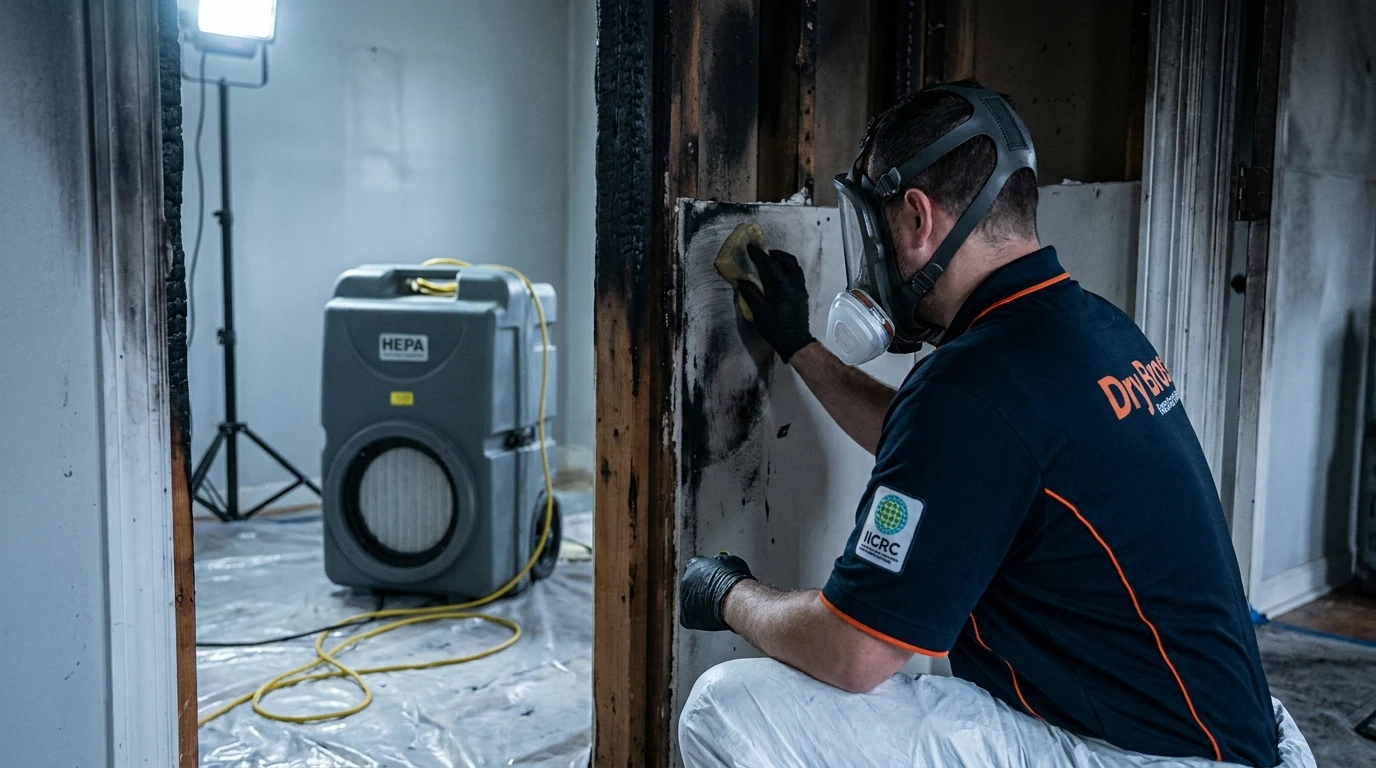
Soot removal comes next, working from ceiling down to floor, using dry chemical sponges on porous surfaces and wet cleaning on washable ones. HVAC ducts almost always need cleaning too, since they’re the fastest route smoke takes into rooms the fire never touched. Odor removal is its own phase, often running hydroxyl generators or thermal fogging equipment for days after the visible cleaning is done, because smoke particles that settled into carpet pad, insulation, and porous wood need a different approach than surface soot.
How long does fire and smoke damage restoration take in Chicago?
Most residential fire and smoke jobs in the Chicago area take 1 to 3 weeks from first inspection to final walkthrough, though a contained kitchen fire with light smoke spread can wrap in under a week while a whole-house fire with structural loss can run 6 to 8 weeks or longer.
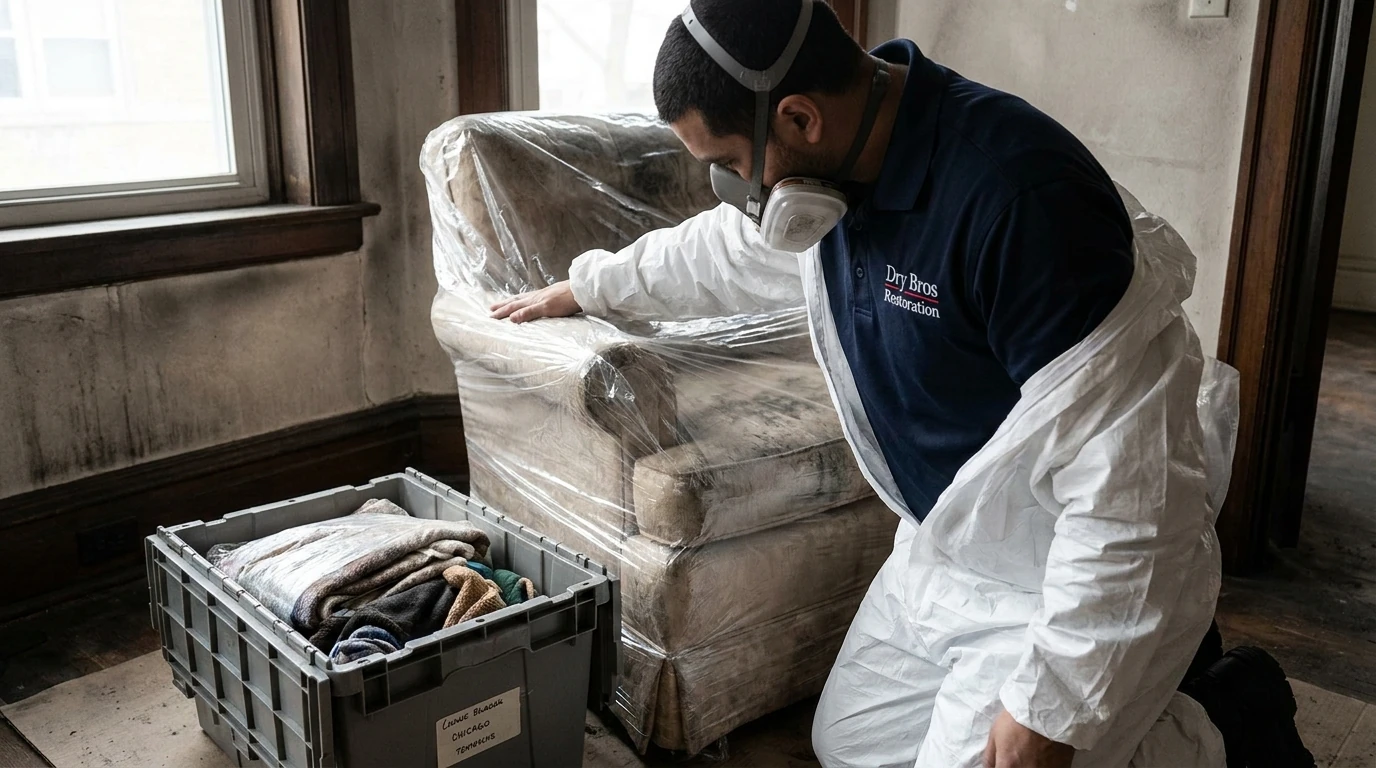
The timeline breaks into phases. Emergency mitigation (board-up, water extraction if hoses were used, initial soot wipe-down) happens in the first 24 to 72 hours. Deep cleaning and deodorization, the longest phase, typically takes 3 to 10 days depending on how far smoke traveled and whether porous materials like carpet or drywall need replacement instead of cleaning. Contents restoration, packing out salvageable items for off-site cleaning and storage, runs in parallel and can add a week or two if a large volume of furniture, textiles, or electronics needs ultrasonic or ozone treatment.
Structural repair, replacing drywall, flooring, or framing damaged by fire or firefighting water, is the variable that stretches a timeline past a month. A kitchen fire that stayed contained to one room with smoke damage in adjoining rooms is a very different job than a fire that burned through a roof deck during a Chicago winter.
What should homeowners watch out for after a house fire?
The biggest mistake after a fire is cleaning soot yourself before a professional assessment, because wiping dry soot with a damp cloth or all-purpose cleaner can smear it permanently into drywall, upholstery, and grout. Soot is acidic and etches surfaces the longer it sits, so the instinct to “just start scrubbing” often costs more than waiting a day for the right equipment.
A second issue specific to Chicago winters: firefighting water left standing in a structure with no heat can freeze pipes within days, turning a fire claim into a water and mold claim too. If the fire happened in the cold months and the heat is off, that needs to be addressed alongside the board-up, not after.
Third, don’t assume your insurer’s first scope covers everything. Adjusters sometimes miss smoke travel into unaffected-looking rooms, particularly through return air ducts. A written restoration scope that documents every affected room, including odor-only rooms with no visible soot, protects the claim if more work is needed than the initial estimate. For a broader look at what the claims process involves, see our guide on the fire damage restoration process.
What should I do first after a fire in my Chicago home?
The first call after the fire department clears the scene should be to a restoration company that can board up the structure immediately and start documenting damage before you touch anything. Dry Bros Water & Fire Restoration answers 24/7 and can get a crew assessing the property and securing openings the same day.
Before a crew arrives, avoid running the HVAC system (it spreads soot further), avoid wiping soot with household cleaners, and photograph every room, including ones that only smell like smoke, for the insurance file. Once on site, a restoration crew scopes the full extent of smoke travel, documents it in writing for the adjuster, and sequences the board-up, cleaning, odor removal, and contents work so nothing sits exposed longer than it has to.
Getting a documented scope early is what keeps a fire claim from becoming a fight later. Request a fire and smoke damage assessment and get a written plan before cleanup starts anywhere on the property.
A fire is disorienting enough without guessing at the cleanup order. Getting the board-up, soot removal, and odor treatment sequenced correctly the first time is usually the difference between a job that’s fully resolved and one where the smell comes back in August humidity.
About Dry Bros Water & Fire Restoration
Dry Bros Water & Fire Restoration is a locally owned and operated, licensed and insured restoration company serving Chicago, IL and the surrounding suburbs including Naperville, Evanston, Oak Park, and Skokie. The team, led by Amin Mashouf, handles fire and smoke damage restoration, water damage restoration, mold remediation, storm damage, and contents restoration, and is available 24/7 for emergency response across the Chicago area.
Need help now? Call Dry Bros Water & Fire Restoration at (877) 379-2767.